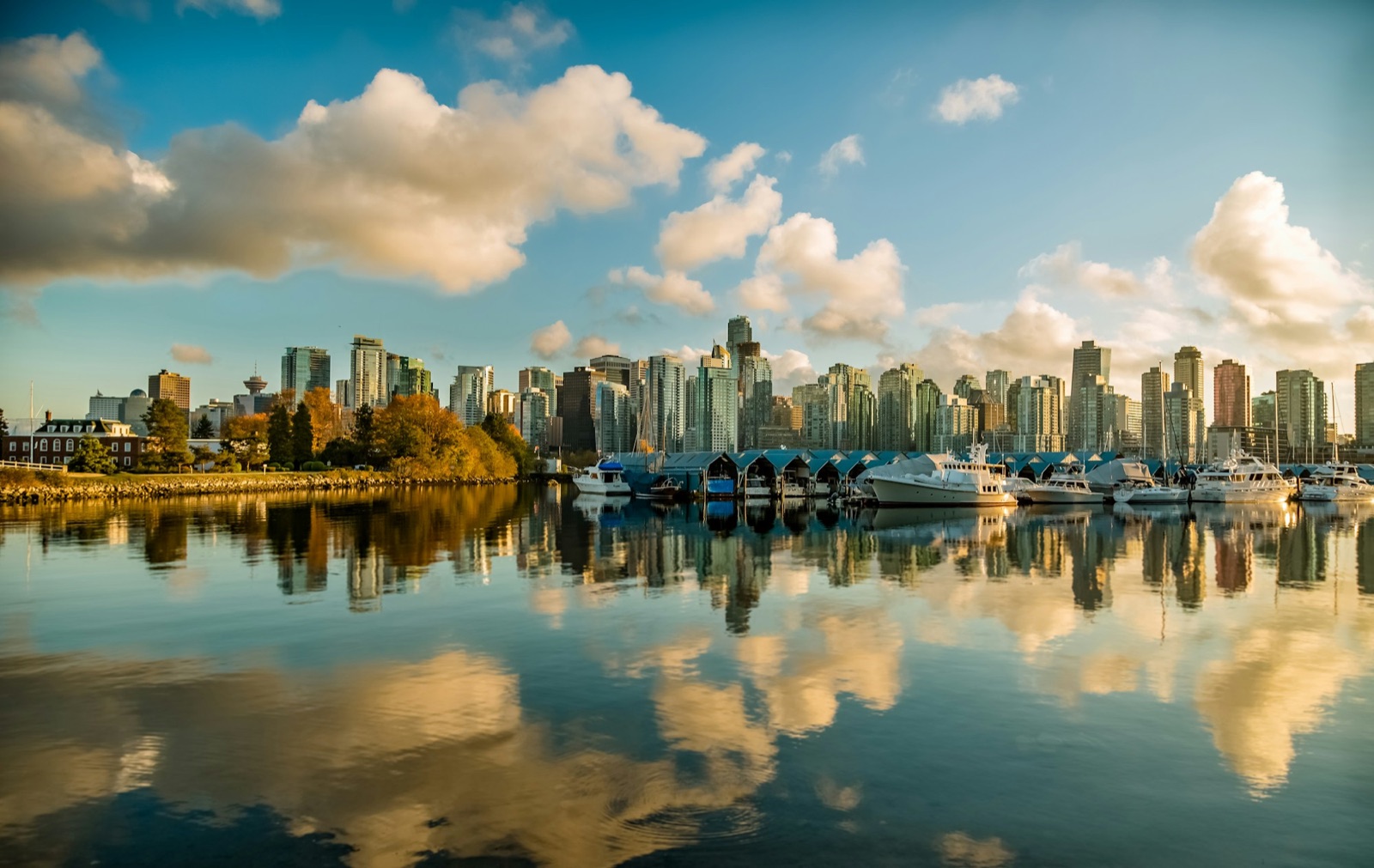
Vancouver is one of those cities that ruins other cities for you. I don't say that lightly — I've traveled a lot, and most places are great for one or two specific reasons. Vancouver is great for almost every reason at once: mountains and ocean in the same frame, one of the most diverse food scenes in North America, and a walkable, bikeable downtown wrapped in a 1,000-acre rainforest. This is my complete, been-there guide to visiting Vancouver, British Columbia — when to go, how to get around, the best things to do, and where to eat.
Here's what puts it in perspective: Vancouver is the only major city in North America where you can ski a world-class mountain in the morning, kayak a sheltered ocean bay in the afternoon, and eat your way through night markets by evening — all without renting a car. That's not a brochure line. I did exactly that in a single January day.
Best Time to Visit Vancouver
The best time to visit Vancouver is June through September, when the city trades its rainy reputation for long, golden, low-70s days with almost zero humidity. July and August are peak season — the warmest weather and every patio open, but also the biggest crowds and highest hotel prices.
- June–September (summer): The sweet spot. Warm, dry, and daylight until nearly 10pm. Book hotels early.
- April–May & October (shoulder season): Fewer crowds and lower prices, with cherry blossoms in spring and fall color in October. Pack a light rain jacket.
- November–March (winter): Rainy and mild in the city, but this is ski season — Whistler is two hours away and the local mountains are 30 minutes from downtown.
Vancouver's rain reputation is worse than the reality. The wet stretch is fall and winter, and even then it's usually a soft, persistent drizzle rather than a dramatic downpour.
How to Get to Vancouver (and Get Around)
Vancouver International Airport (YVR) is one of the best-connected airports on the West Coast, with direct flights from most major U.S. and international hubs. From the airport, skip the taxi line: the Canada Line SkyTrain gets you from YVR to downtown in about 26 minutes for roughly CA$9 — one of the best airport-transit deals anywhere.
Once you're in the city, you almost certainly don't need a car. The SkyTrain, buses, and the SeaBus ferry cover everywhere a visitor wants to go, and downtown, Stanley Park, and the beaches are genuinely walkable and bikeable. Rent a car only if you're heading to Whistler, the Fraser Valley, or up the Sea-to-Sky Highway — which you should, because it's one of the most beautiful drives in the country.
Planning to rack up flights and hotel nights to get here? A good travel rewards card pays for a real chunk of the trip. I break down the one I actually use in my Capital One Venture X review.
The Best Things to Do in Vancouver
You could spend a week here and not run out of things to do. These are the experiences I'd put at the top of any first-timer's Vancouver itinerary.
Stanley Park & the Seawall
Stanley Park is the reason Vancouver feels different from every other city. It's a 1,000-acre old-growth forest attached to downtown — thick Douglas fir and cedar, rocky coastline, and a paved Seawall trail that rings the whole thing. Walk or bike the loop (about 9 km, 90 minutes on foot) and you'll pass beaches, the famous totem poles, Lions Gate Bridge, and a skyline-and-mountains view that recalibrates what you think a city can be. Rent a bike near the entrance and ride counter-clockwise — it's the required direction, and it keeps the ocean on your side.
Granville Island Public Market
Granville Island is a former industrial peninsula turned food-and-arts district, and its Public Market is the heart of it: Dungeness crab pulled from the boat that morning, artisan cheese, Okanagan fruit, and bakers who take their craft seriously. Get there before 10am — it fills up fast and the good stuff sells out. Grab lunch, wander the artisan studios, then catch one of the tiny rainbow ferries back across False Creek.
Capilano Suspension Bridge & Grouse Mountain
Fifteen minutes north of downtown, the mountains start. The Capilano Suspension Bridge sways 70 meters above a rainforest canyon and connects to a network of cliff-walks and treetop bridges. Just up the road, Grouse Mountain runs a gondola to sweeping city views, and in winter it becomes a ski hill you can see from downtown. Do both in a half-day.
Gastown & Historic Downtown
Gastown is Vancouver's oldest neighborhood — cobblestone streets, Victorian brick, the steam-powered clock everyone photographs, and some of the city's best restaurants and cocktail bars packed into a few walkable blocks. It's the perfect place to end a day.
Where to Eat: Vancouver's Food Scene
Vancouver's food is shaped by geography and immigration in equal measure. The city has one of the largest Asian populations of any city in North America, and the result is a dining scene that punches far above its size.
- Richmond's night markets & Chinese food: The suburb of Richmond, 20 minutes south, is regularly called the best Chinese-food destination outside of Asia. It's worth a dedicated trip.
- Fresh seafood: Spot prawns, Dungeness crab, wild salmon, and oysters, often landed the same day.
- Japanese & izakaya: Some of the best sushi and izakaya dining outside Japan.
- Food trucks: Downtown's street-food scene, especially around the art gallery, is excellent and budget-friendly.
Where to Stay in Vancouver
Where you stay shapes the whole trip. Quick neighborhood guide:
- Downtown / Coal Harbour: Best for first-timers — walk to Stanley Park, the waterfront, and Gastown.
- Yaletown: Trendy and walkable, with great restaurants and nightlife along False Creek.
- Kitsilano ("Kits"): Laid-back beach vibe, indie shops, and the best sunset beach in the city.
- West End: Quieter and leafy, steps from both the park and the beaches — often better value.
If your dates are flexible, you can stretch a Vancouver trip a long way. I explain one of my favorite budget tricks in how to vacation with timeshares without buying one.
What Vancouver Costs
Vancouver isn't cheap, but it's manageable with a little planning. Expect mid-range hotels around CA$200–350/night in summer, transit passes around CA$11/day, and restaurant mains from CA$20–35. The most memorable things — Stanley Park, the Seawall, the beaches, and the views — are completely free.
Vancouver Travel FAQ
How many days do you need in Vancouver?
Three to four days is the sweet spot for a first visit — enough for Stanley Park, Granville Island, the mountains, and the food, with a day left for a Sea-to-Sky or Whistler day trip.
Is Vancouver expensive to visit?
It's one of Canada's pricier cities for hotels, but transit is cheap, and its best experiences — the Seawall, beaches, and mountain views — are free. Shoulder season (spring and fall) saves the most.
Do you need a car in Vancouver?
No. The SkyTrain and buses cover the city and downtown is walkable. Rent a car only for day trips to Whistler or the Sea-to-Sky Highway.
What is the best time to visit Vancouver?
June through September, for warm, dry, low-70s days and long daylight. Spring and fall are quieter and cheaper; winter is rainy in the city but great for nearby skiing.
Vancouver will change your benchmark for what a city should feel like. Go once and you'll understand why it ruins other cities — in the best possible way.