The flight is almost always the biggest, most volatile line item of any trip — the same seat can swing hundreds of dollars depending on nothing more than timing and luck. After years of booking my own travel, I've gotten genuinely good at paying less for it, and none of it involves gimmicks or a secret website. It's a repeatable system. Here's exactly how I find cheap flights, what actually moves the price, and the myths worth ignoring.
Note: this post may contain affiliate links and ads. If you use them I may earn a small commission at no cost to you — see my disclosure. The flight tools I recommend below are simply the ones I use.
First, Kill the Myths
Let's clear the junk out of the way, because most "cheap flight hacks" are folklore:
- "Book on Tuesday at 3 p.m." — not a real thing anymore. Airlines price fares dynamically, minute to minute, based on live demand and remaining seats. There is no magic day-of-week or hour that reliably wins.
- "Search in incognito / clear your cookies and prices drop." — mostly a myth. Fares move because of inventory and demand, not because a site is punishing you for looking twice. It's harmless to try; just don't build a strategy on it.
- "There's a perfect number of days out." — there's a range, not a magic number (more on that next).
The real levers are boring and effective: when in the calendar you buy, how flexible you are, and which tools you point at the problem. That's the whole game.
When to Actually Book (the Booking Window)
The single most useful timing concept isn't a day — it's a window. Fares tend to be lowest in a sweet spot that's neither too early nor too late:
- Domestic trips: roughly 1 to 3 months before departure.
- International trips: roughly 2 to 6 months out (longer for peak-season and holiday travel).
Book much earlier and airlines often haven't discounted yet; wait until the final week or two and you're competing with last-minute business travelers who'll pay anything — which is exactly when fares spike. Aim for the middle, and start watching prices before you're ready to buy so you know a good number when you see it.
The Cheapest Days to Fly (Not Book)
Here's where day-of-week actually matters — not when you buy, but when you travel. Leisure demand clusters on Fridays and Sundays, so those tend to be the priciest days to fly out and back. Shift your trip and you shift the price:
- Cheapest to fly: Tuesdays, Wednesdays, and often Saturdays.
- Most expensive: Friday departures and Sunday returns.
- Flying out a day earlier or back a day later can quietly save more than any "hack."
Flexibility on your travel dates is the biggest lever you have. If your dates are locked, you're at the mercy of that day's price. If they can flex by even 48 hours, you're in control.
Be Flexible — On Where, Too
The travelers who get the wildest deals aren't loyal to a destination — they're loyal to a good price. Two habits unlock this:
- Search "everywhere." Tools like Google Flights' Explore map and Skyscanner's "Everywhere" search show you the cheapest places to fly from your home airport on your dates. Let the deal pick the destination sometimes.
- Check nearby airports. A second airport an hour away can be hundreds cheaper. Always compare.
The Tools I Actually Use
My whole workflow runs on three free tools:
- Google Flights — my starting point for the date grid (see a whole month of prices at a glance), the Explore map, and price tracking. It's fast and honest.
- Skyscanner — great for the "everywhere / cheapest month" searches and for catching fares Google misses.
- FlightsFrom — my secret weapon for the flexibility game. You pick your home airport and it maps every non-stop route and airline flying out of it, including the low-cost carriers that big search sites quietly leave out. It's how I discover cheap direct routes I didn't even know existed, then price them in Google Flights.
Don't Sleep on Budget Carriers (but do the math)
Low-cost carriers — Southwest, Spirit, Frontier, Ryanair, and the like — can be a genuine deal, and they're exactly the airlines FlightsFrom surfaces that others hide. The catch is the base fare is only the start: bags, seat selection, and extras add up fast. The move is simple: price the total, not the teaser. Add your bags and seat to the budget fare, compare that number to the legacy carrier, and pack light. Do the real math and they often win; ignore the add-ons and they often don't.

Low-cost carriers like Southwest are often the cheapest option — and the ones the big search sites skip.
Set Fare Alerts and Let the Deals Come to You
The best deal-finders are lazy in the smartest way: they set alerts and wait. In Google Flights, tap Track prices on any route and it emails you when the fare moves. Apps like Hopper predict whether to buy or wait, and deal services like Going (formerly Scott's Cheap Flights) email you genuinely cheap fares and the occasional mistake fare — those rare pricing errors that vanish within hours. You won't catch those staring at one route; you catch them by having alerts running in the background.
The VPN Price Trick — Does It Work?
Here's one that's real but inconsistent: airline and booking sites sometimes show different prices to different countries, based on local currency and regional pricing. Connecting through a VPN set to another country can occasionally surface a lower fare for the same seat. It doesn't work every time — but it's free to test, and it takes thirty seconds. The bigger reason I keep a VPN on while booking travel: I'm often on hotel or airport Wi-Fi, and I'd rather not hand my card details to a public network in the clear.
The 24-Hour Rule Is Your Safety Net
A genuinely useful, underused protection: for flights booked directly with a U.S. airline at least seven days before departure, U.S. rules let you cancel within 24 hours for a full refund. That means you can lock in a good fare the moment you see it, then keep hunting for something better — and walk away free if you find it. Book the deal first; second-guess it later.
Then Stack It With Points
Every dollar you do spend on flights should be earning something back. A solid travel rewards card turns your booking into miles and often adds trip protection and lounge access on top — which is exactly why a card like the Capital One Venture X pays for itself for anyone who flies a few times a year. Cheap fare plus rewards is the real win.

The payoff: a seat you paid far less for than the person next to you.
My Quick Checklist
- Start watching the route early, buy in the window (1–3 months domestic, 2–6 international).
- Fly mid-week if you can; flex your dates by a day or two.
- Use Google Flights + Skyscanner + FlightsFrom; search nearby airports and "everywhere."
- Set fare alerts and let deals find you.
- Price budget carriers with bags included before deciding.
- Grab it with the 24-hour free-cancel rule, then keep looking.
- Pay with a travel rewards card to earn on every fare.
Frequently Asked Questions
When is the cheapest time to book a flight?
There's no magic hour or day to buy — airlines price dynamically. Aim for the booking window: about 1–3 months out for domestic and 2–6 months for international. Buying too early or in the last two weeks usually costs more.
What day of the week is cheapest to fly?
Flying mid-week — Tuesday, Wednesday, or Saturday — is generally cheaper than Friday or Sunday, when leisure demand peaks. Flexing your dates by a day or two is one of the biggest ways to cut the fare.
Is it cheaper to book in incognito mode?
Mostly a myth. Clearing cookies or going incognito doesn't reliably lower fares — prices swing on live demand, not on whether a site remembers you. Harmless to try, but don't rely on it.
Are budget airlines actually worth it?
Sometimes. A low base fare can beat a legacy carrier even after bags and a seat — but only if you do that math first. Price the total, carry on light, and they can be a real deal.
That's the entire playbook — no secret site, just a flexible mindset and a few free tools pointed at the problem. Do this a couple of times and it becomes automatic: you'll start seeing "cheap flight" as a solvable puzzle instead of a lucky accident, and you'll travel more because of it.
Keep Reading
- Capital One Venture X Review: Is It Worth It?
- How to Plan a Trip: The System My Partner and I Actually Use
- Use Timeshares Without Buying One
- Is a VPN Worth It for Travel? An Honest NordVPN Review
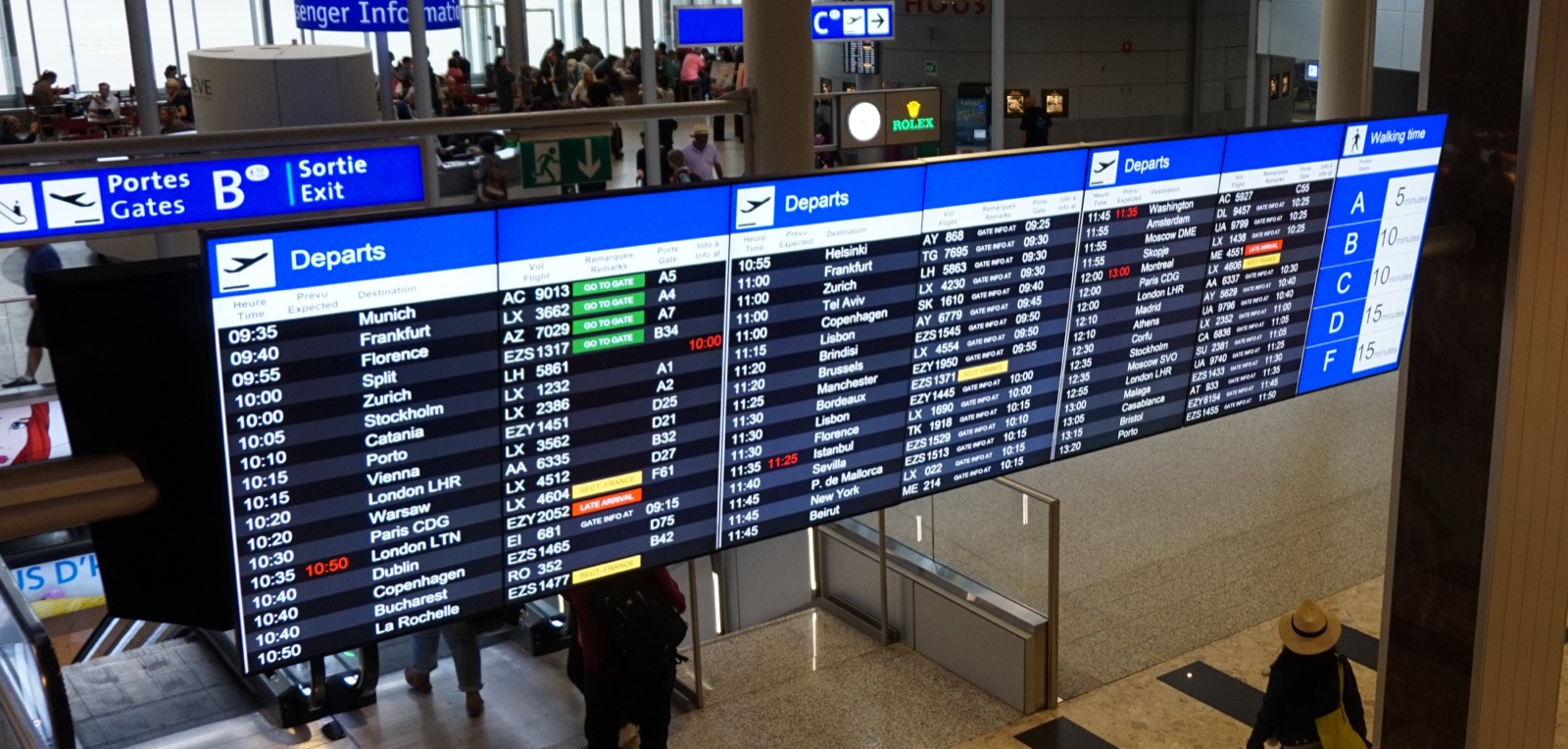
Image credits: Geneva Airport departure board by Tiia Monto (CC BY-SA 3.0); Southwest Boeing 737 by Acroterion (CC BY-SA 4.0); airplane wing by the U.S. Department of Agriculture (public domain). Cropped and resized from the originals.